Characterization of Human AB Serum for Mesenchymal Stromal Cell Expansion
Introduction
Mesenchymal stromal cells (MSCs) are widely used in regenerative medicine and cell-based therapies due to their immunomodulatory and tissue repair capabilities. However, MSCs naturally occur in very low concentrations in human tissues. For clinical applications, these cells must be expanded in vitro under Good Manufacturing Practice (GMP) conditions.
One of the most critical factors in MSC expansion is the culture medium supplement used during cell growth. Traditionally, fetal bovine serum (FBS) has been the standard supplement for cell culture. Although FBS effectively supports cell proliferation, its use raises several concerns:
- Risk of transmitting xenogenic pathogens
- Potential immune reactions in patients
- Batch-to-batch variability, affecting reproducibility
- Ethical issues related to animal-derived materials
- Limited global supply
Because of these challenges, regulatory agencies increasingly recommend xeno-free alternatives for clinical cell manufacturing.
Among the proposed alternatives, human blood-derived supplements such as human serum, platelet lysate, and umbilical cord blood serum have shown promising results. In particular, human AB serum (AB HS) is considered a strong candidate because it lacks ABO antibodies, reducing the risk of immune reactions.
This study evaluates the biochemical characteristics, quality parameters, and effectiveness of human AB serum for MSC expansion, including its stability during long-term storage.
Human AB Serum Production from Plasma Sources
Plasma Sources Used
Two types of plasma were evaluated for AB serum production:
1. Plasma stored longer than 24 hours (PC > 24 h)
This plasma originates from whole blood donations but does not meet the strict technical requirements for therapeutic plasma use. Instead of being discarded, it can be processed for other applications.
2. Cryoprecipitate-reduced plasma (PCryoR)
This plasma is a by-product generated during cryoprecipitate production and is commonly available in blood banks.
Both plasma sources are normally sent to fractionation industries or discarded, making them a valuable resource for alternative biomedical applications.
Safety and Donor Screening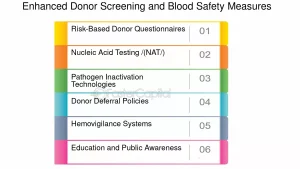
To ensure safety and compliance with blood bank standards, all plasma donors met strict criteria:
- Blood type AB positive
- Negative screening for infectious diseases including:
- HIV-1 and HIV-2
- Hepatitis B
- Hepatitis C
- Syphilis
- Chagas disease
- HTLV-1 and HTLV-2
- Negative nucleic acid testing (NAT) for viral infections
- No history of pregnancy (to reduce TRALI risk)
- Plasma free from hemolysis or lipemia
This rigorous screening ensures high biological safety for clinical applications.
AB Serum Production Process
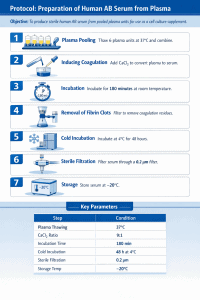
Human AB serum was produced using a modified version of an established protocol.
Main Steps
- Pooling plasma units
- Six plasma units were thawed at 37°C and combined.
- Inducing coagulation
- Calcium chloride (CaCl₂) was added to convert plasma into serum.
- Incubation
- The mixture was incubated for 180 minutes at room temperature.
- Removal of fibrin clots
- Filtration removed coagulation residues.
- Cold incubation
- Serum was incubated for 48 hours at 4°C.
- Sterile filtration
- Final sterilization used a 0.2 µm filter.
- Storage
- Serum batches were stored at −20°C.
The process achieved a high production yield of approximately 96.5%, significantly higher than yields reported for platelet lysate production.
Quality Control and Biochemical Characterization
To ensure consistency and suitability for cell therapy applications, multiple quality parameters were evaluated.

Microbiological Safety
Each serum batch was tested for:
- Bacterial contamination
- Fungal contamination
- Mycoplasma presence
All samples were sterile and free from microbial contamination.
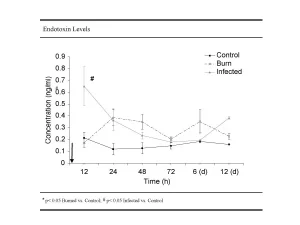 Endotoxin Levels
Endotoxin testing confirmed levels below the European Pharmacopoeia limit (<5 EU/mL), indicating suitability for biomedical use.
Biochemical Profile
Several biochemical parameters were analyzed, including:
- Total protein
- Electrolytes (sodium, potassium, chloride)
- Glucose
- Calcium
- Cholesterol
- Urea
- Creatinine
- Liver enzymes (ALT, AST, GGT)
- Osmolality
Although some values differed from fetal bovine serum due to species differences, the overall biochemical profile was similar to that of healthy human serum.
Stability During Storage
To determine shelf life, serum samples were analyzed after:
- 3 months
- 6 months
- 9 months
- 12 months
No significant biochemical changes were observed during storage at −20°C, demonstrating strong long-term stability.
Mesenchymal Stromal Cell Culture Using AB Serum
Experimental Setup
Human MSCs derived from umbilical cord matrix were used to evaluate the performance of AB serum.
Cells were cultured in alpha-MEM medium supplemented with:
- 10% fetal bovine serum (control group)
- 10% human AB serum
Cells were monitored across multiple passages to evaluate:
- Growth rate
- Morphology
- Expansion efficiency
Cell Morphology
MSCs cultured with AB serum showed the typical spindle-shaped morphology associated with healthy mesenchymal stromal cells.
Their appearance was identical to cells grown with fetal bovine serum, indicating normal cellular behavior.
Cell Expansion Performance
Key growth indicators included:
- Doubling time (DT)
- Cumulative population doubling (CPD)
Results showed no significant differences between AB serum and FBS cultures. MSCs expanded efficiently in both conditions.
Additionally, the serum maintained its ability to support cell growth even after 12 months of storage.
MSC Functional Characterization
After expansion, MSCs were evaluated for key biological characteristics.
Surface Marker Expression
Flow cytometry confirmed the expected MSC marker profile:
Positive markers
- CD73
- CD90
- CD105
- CD146
- CD166
Negative markers
- CD14
- CD34
- CD45
- CD31
- HLA-DR
This confirms that AB serum does not alter MSC identity.
Differentiation Potential
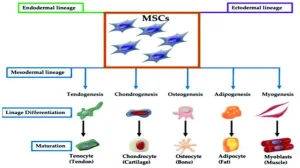
MSCs cultured with AB serum successfully differentiated into:
- Adipocytes (fat cells)
- Osteocytes (bone cells)
- Chondrocytes (cartilage cells)
This demonstrates that cell multipotency remains intact.
Immunomodulatory Function
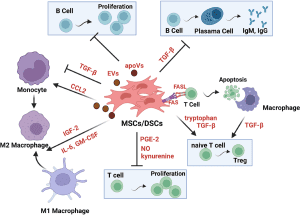
One important therapeutic property of MSCs is their ability to suppress T-lymphocyte proliferation.
Co-culture experiments showed that MSCs expanded with AB serum retained the ability to inhibit immune cell proliferation, similar to FBS-grown cells.
Genetic Stability
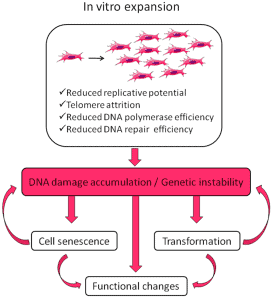
Chromosomal analysis was performed after long-term culture.
All cells maintained a normal karyotype (46,XX) with no chromosomal abnormalities, confirming genetic stability during expansion.
Advantages of Human AB Serum for Cell Therapy
The results highlight several advantages of AB serum as an FBS alternative:
- Human-derived supplement (xeno-free)
- Reduced risk of immune reactions
- High production yield
- Stable for at least 12 months
- Supports MSC proliferation and functionality
- Compatible with GMP manufacturing processes
Furthermore, using blood bank plasma by-products improves resource utilization and reduces waste.
Conclusion
Human AB serum produced from blood bank plasma is a safe, effective, and reliable alternative to fetal bovine serum for mesenchymal stromal cell expansion.
Both plasma sources tested—PC > 24 h and cryoprecipitate-reduced plasma produced serum with similar biochemical profiles, sterility, and performance.
MSC cultures supplemented with 10% AB serum showed comparable growth, immunophenotype, differentiation potential, and genetic stability to FBS cultures.
Importantly, the serum maintained its effectiveness after 12 months of storage at −20°C, confirming its suitability for long-term use in cell manufacturing.
Overall, human AB serum represents a promising xeno-free supplement for large-scale MSC production in clinical and regenerative medicine applications.